
DMR (Digital Mobile Radio) technology stands as a leading core standard for Land Mobile Radio (LMR) worldwide. Developed under the auspices of the European Telecommunications Standards Institute (ETSI), it strictly adheres to the full suite of ETSI TS 102 361-1, 2, 3, and 4 technical specifications, ensuring cross-vendor device compatibility and system stability. As an open international standard, DMR has garnered extensive support from global top-tier communication equipment manufacturers such as Motorola, Hytera, and ZTE GoTa, forming a robust industrial chain ecosystem. It provides users with long-term technical support and flexible supplier options, making it the “intelligent long-term choice” in the professional communication field. Currently deployed in over 90 countries worldwide with more than 1 million users, DMR holds a central position in critical sectors including military, police, public safety, and energy. The global market size is projected to reach USD 19.84 billion by 2035, boasting a high compound annual growth rate (CAGR) of 13.27%.
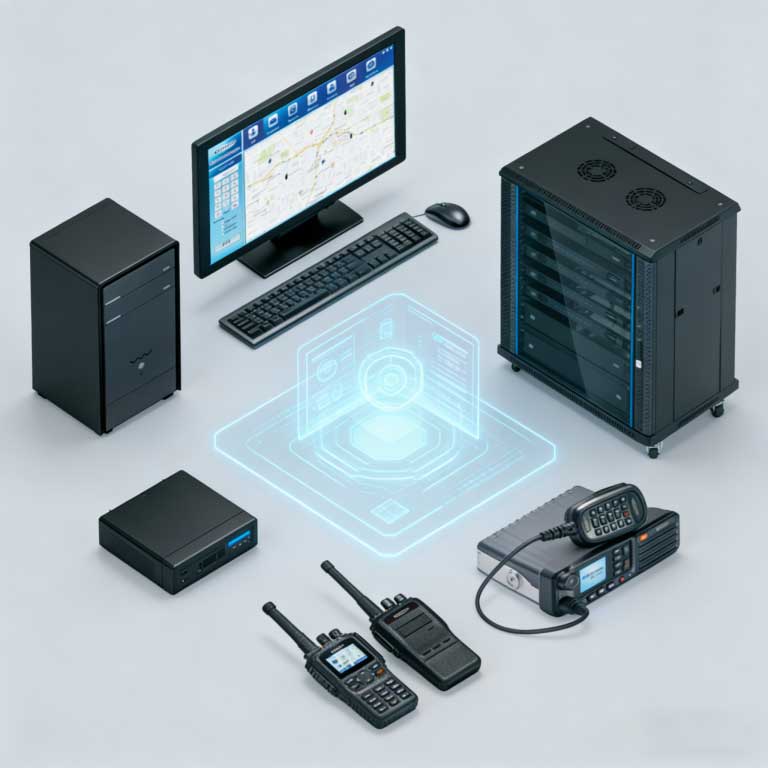

TDMA Dual-Slot Technological Breakthrough
Adopting a Time Division Multiple Access (TDMA) dual-slot architecture within a 12.5kHz channel, DMR doubles communication capacity without increasing spectrum occupancy. It enables a single channel to carry two simultaneous voice or data transmissions, significantly optimizing spectrum resource utilization. Compared to traditional analog systems and FDMA digital systems, DMR achieves doubled capacity without the need for rebanding or additional authorizations, substantially reducing deployment costs and operational maintenance pressure.

Superior Communication Reliability
Through 4FSK modulation technology, Forward Error Correction (FEC) coding, and Cyclic Redundancy Check (CRC) mechanisms, DMR automatically detects and corrects transmission errors, effectively shielding against environmental noise and signal interference. Even in complex terrains, strong electromagnetic interference, or edge-of-coverage areas, it maintains high-definition voice quality and stable connectivity. The application of digital processing technology improves voice clarity by over 30% compared to analog radios, enabling high-fidelity communication even in high-noise environments such as chainsaw operation or heavy equipment work.

Energy Efficiency and Long Battery Life
Benefiting from the alternating time-slot operation mode of TDMA technology, terminal devices reduce transmission time by 50%. Combined with low-power chip design, battery life is extended by 30%-50% compared to traditional analog radios. Mainstream devices can support continuous operation for over 24 hours, fully meeting the high-intensity shift work requirements of military and police forces.

Multi-Layered Encryption Security
Addressing the confidentiality requirements of military and police communications, DMR supports high-strength encryption algorithms such as 256-bit AES and ARC4. Through dual protection of hardware encryption and software encryption, it achieves end-to-end encryption for voice calls and data transmission. Additionally, it features radio identity authentication to effectively prevent unauthorized access or eavesdropping, ensuring the security of classified information.

Emergency Dispatching Core Capabilities
Equipped with “one-touch call and group intercom” dispatching functions, it supports priority calls and emergency call triggering. Pressing the dedicated orange emergency button initiates full-domain alerts instantly, synchronously transmitting key data such as user IDs and location information to achieve a “one-call response” emergency command effect. Some high-end terminals also include a “Man Down” function, which automatically detects personnel distress through posture sensors and triggers rescue signals, providing additional safety guarantees for individual combatants.

Multi-Scenario Adaptive Performance
Terminal devices generally hold IP67 protection certification, featuring dustproof, waterproof, and drop-resistant capabilities for stable operation in harsh environments such as heavy rain, sandstorms, and rough terrain. Supporting dual-mode GPS/Beidou positioning, they can real-time transmit location data of personnel and equipment, enabling precise command when paired with visual dispatching platforms. Positioning data can be synchronized during voice calls to enhance emergency response efficiency. Meanwhile, multi-user profile configuration allows flexible switching of volume, tones, and vibration modes to adapt to different scenarios such as indoor meetings and outdoor operations.

Integrated Voice and Data Transmission
While ensuring high-definition voice communication, DMR supports multiple data services including text messages, status reports, and GPS positioning data. Data transmission does not affect voice quality, perfectly adapting to the dual needs of “voice command + data dispatching” in military and police applications.